

© 2026 Stanley Law. All Rights Reserved; Designed by OTM
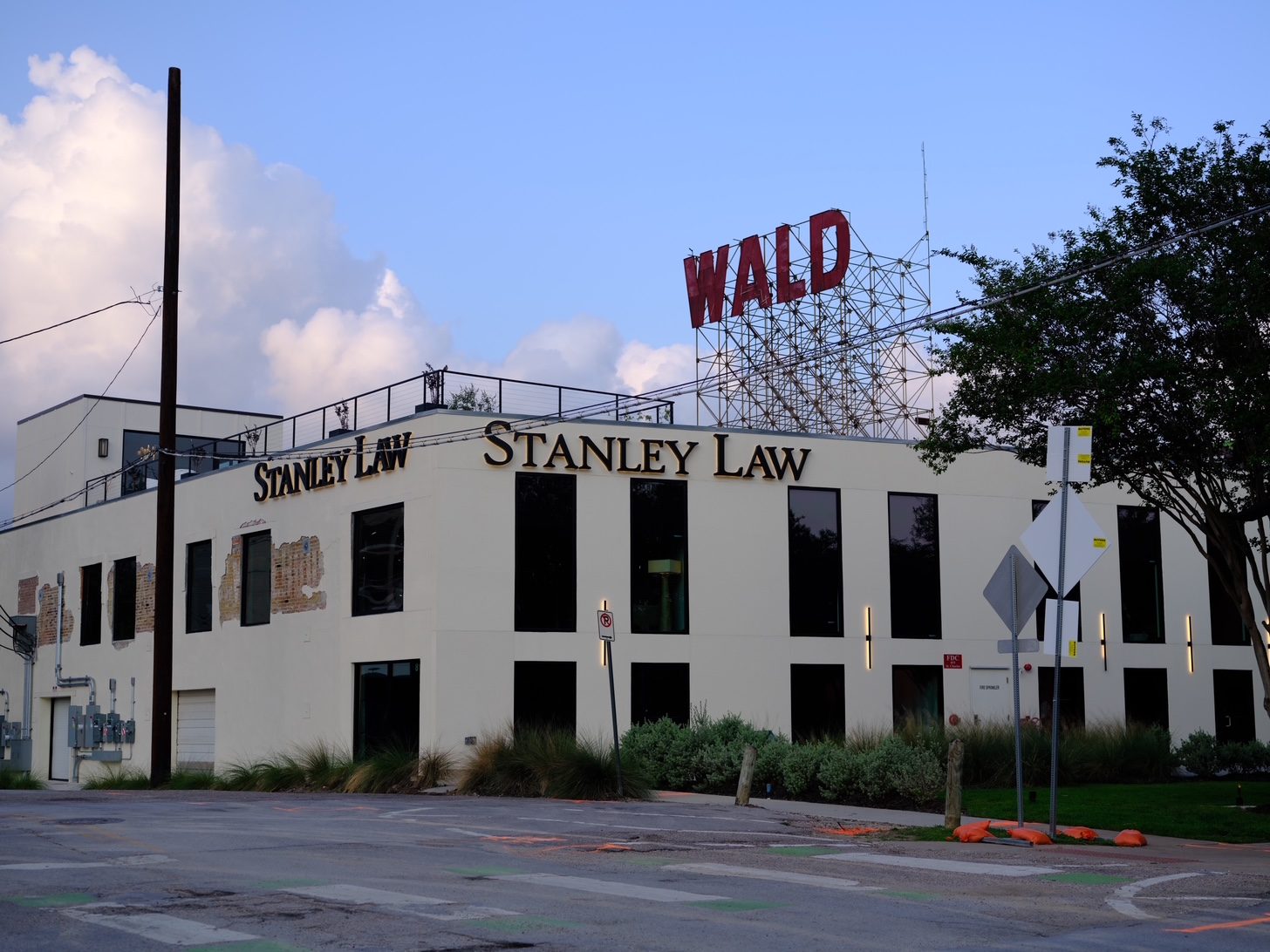
The building today: "STANLEY LAW" on the restored facade, the historic "WALD" sign above, and the rooftop deck along the parapet.
The brick warehouses at 815 St. Charles Street were built beginning in 1927, in the heart of what is now Houston's East Downtown (EaDo). For most of their life they served exactly the purpose the rooftop sign still announces: storage and distribution.
What reads as a single building is in fact part of a four-warehouse complex that Wald owned and operated — four structures that abut one another along St. Charles Street. Stanley Law occupies two of them, joined into a single connected office of roughly 33,000 square feet at 815 St. Charles; the other two now operate as a mini-storage facility. The "WALD" sign sits atop the storage building, where it has always stood.
The structures carry the unmistakable construction of their era — exposed brick, heavy wood beams, and pine plank floors on the upper levels — a footprint sized for freight, not foot traffic. The neighboring warehouse at 912 St. Charles followed in 1930, part of a rail-served warehouse district that filled in through the late 1920s and 1930s.
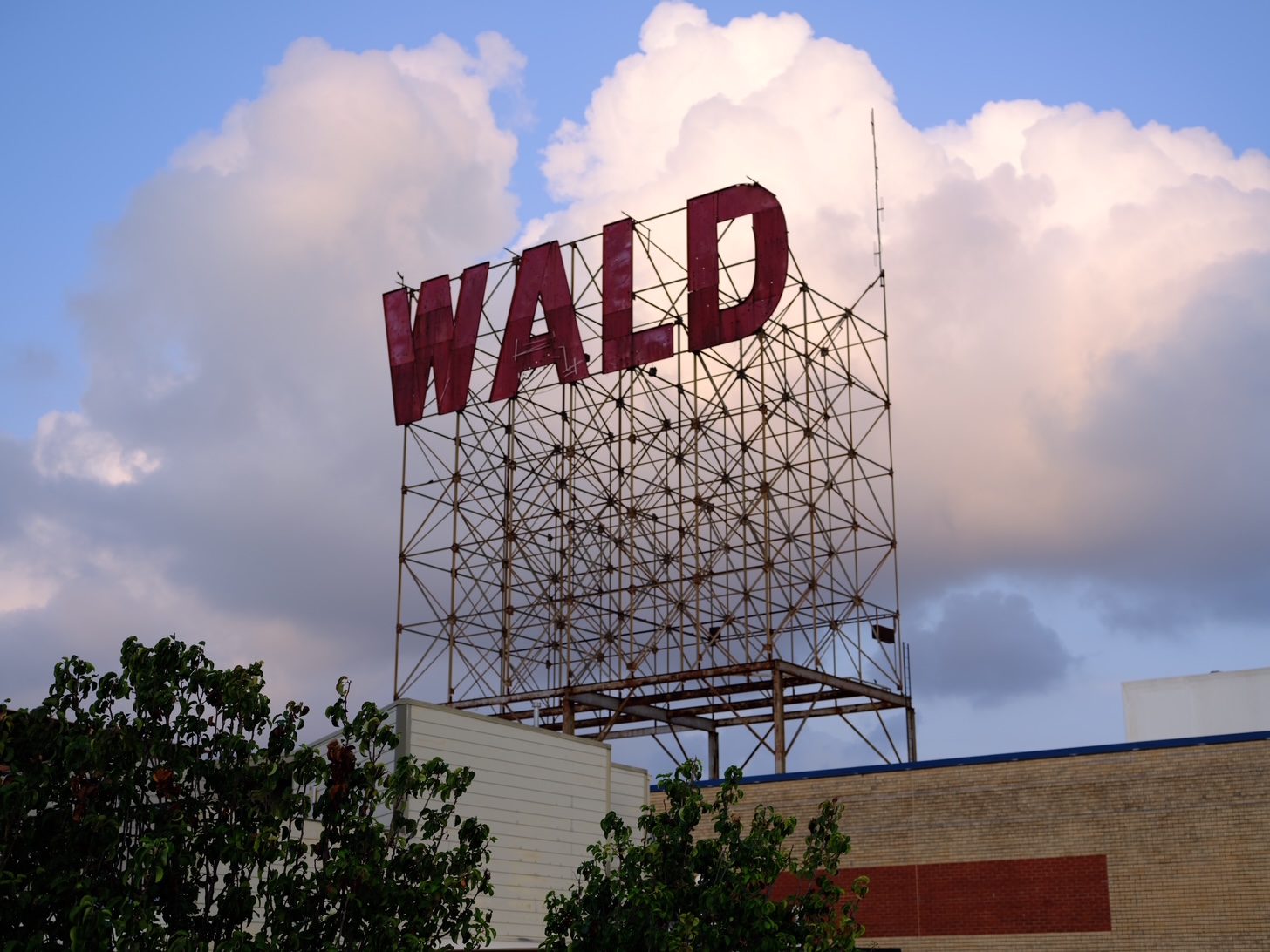
The original "WALD" sign, still standing atop the adjoining storage building nearly a century later.
The warehouse sits directly along the former Columbia Tap rail line — a corridor dating to the 1850s that ran through Houston's East End and Third Ward. Siting a storage-and-distribution warehouse on that line in the 1920s was the whole point: goods came in by rail, were held, and went back out for distribution — cotton, sugar, and even automobiles delivered by train before they ever touched a road.
The tracks are gone now. The abandoned rail bed was converted into the Columbia Tap Hike and Bike Trail, which is why the buildings today front a recreational path — and a patio — rather than active rail. The Wald complex stands about two blocks from Shell Energy Stadium (Houston Dynamo) and within walking distance of the East Village entertainment district.
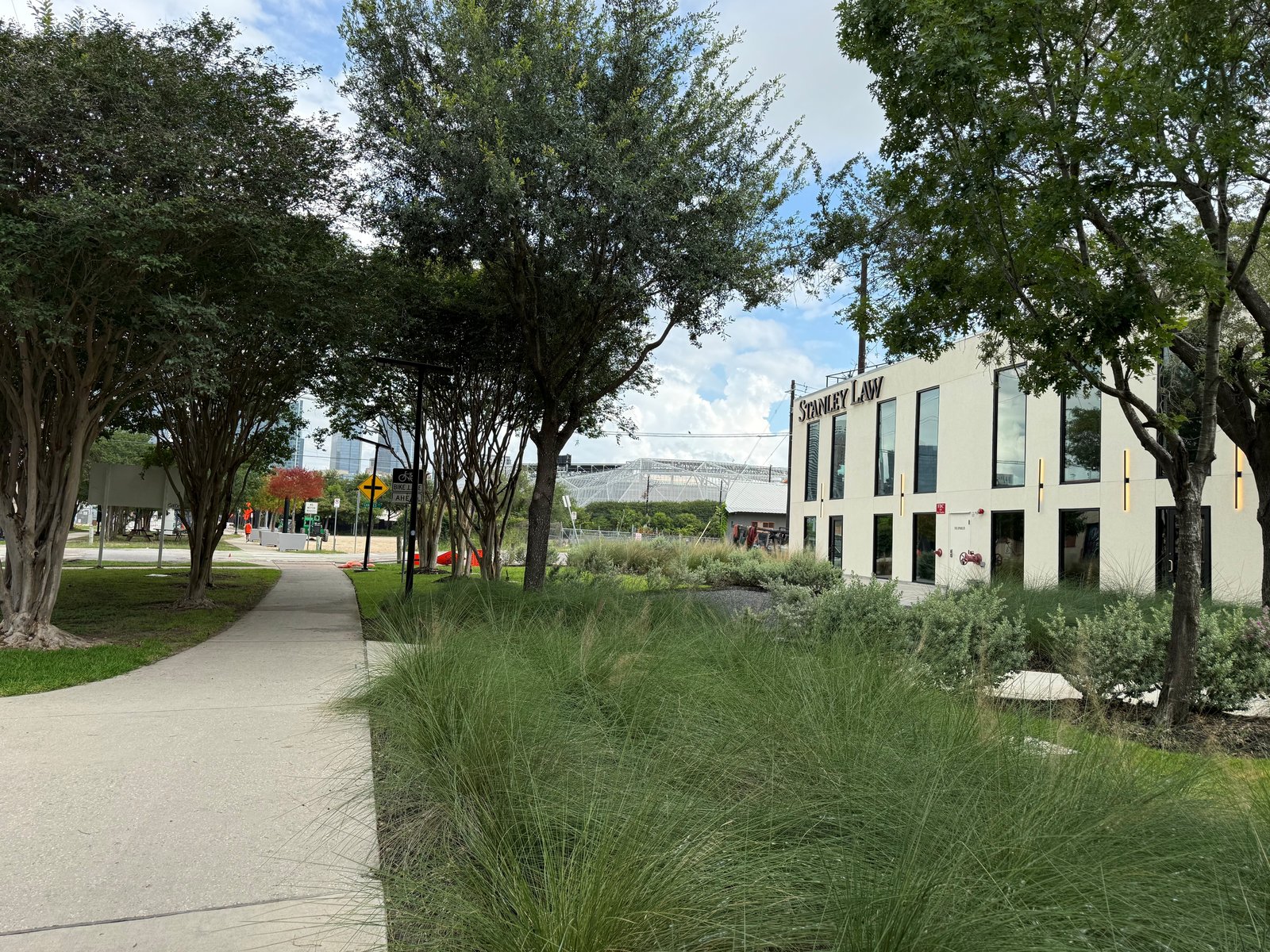
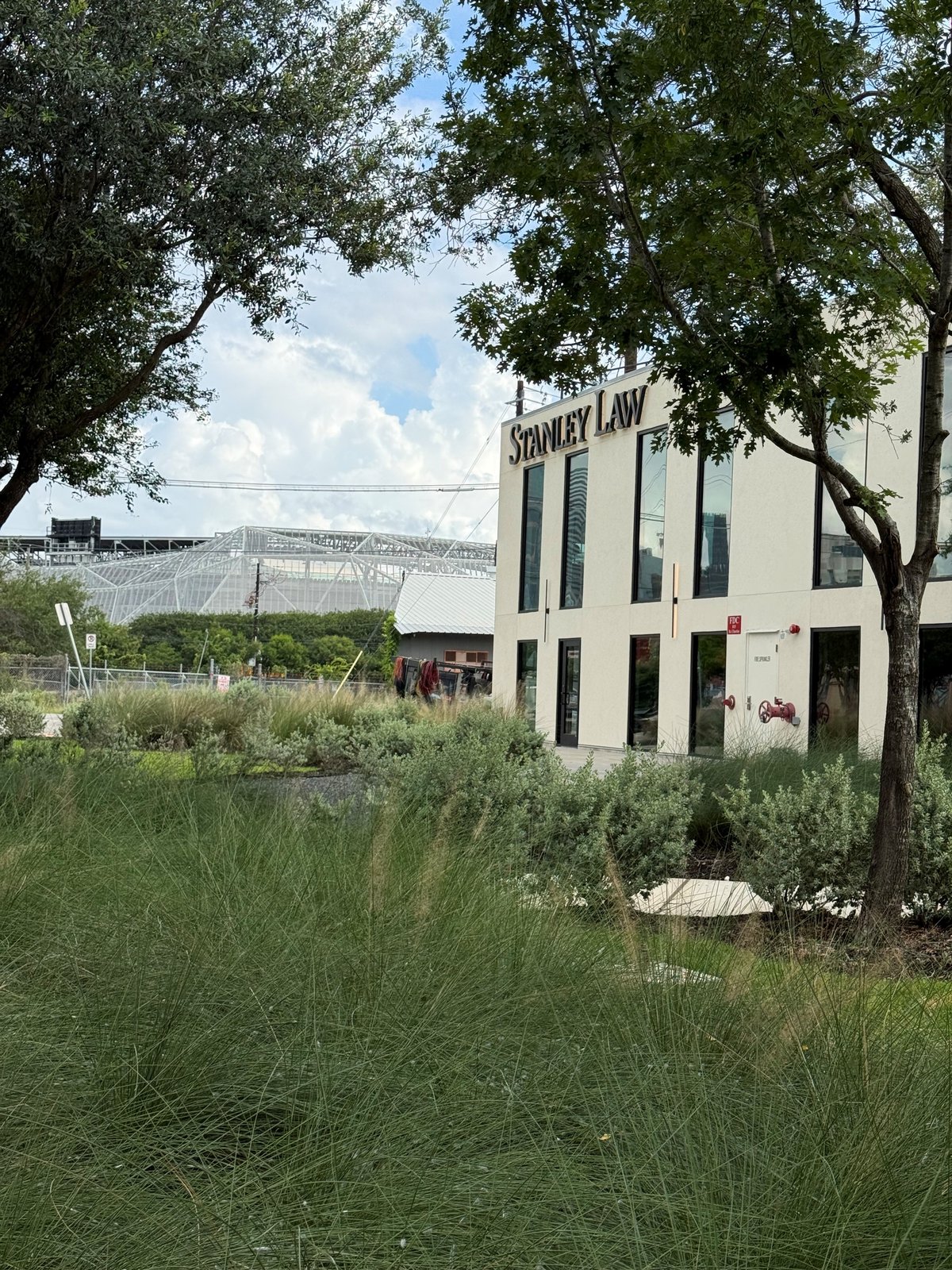
The Columbia Tap Hike and Bike Trail today — built on the old rail bed — running right past the building, with Shell Energy Stadium and downtown beyond.
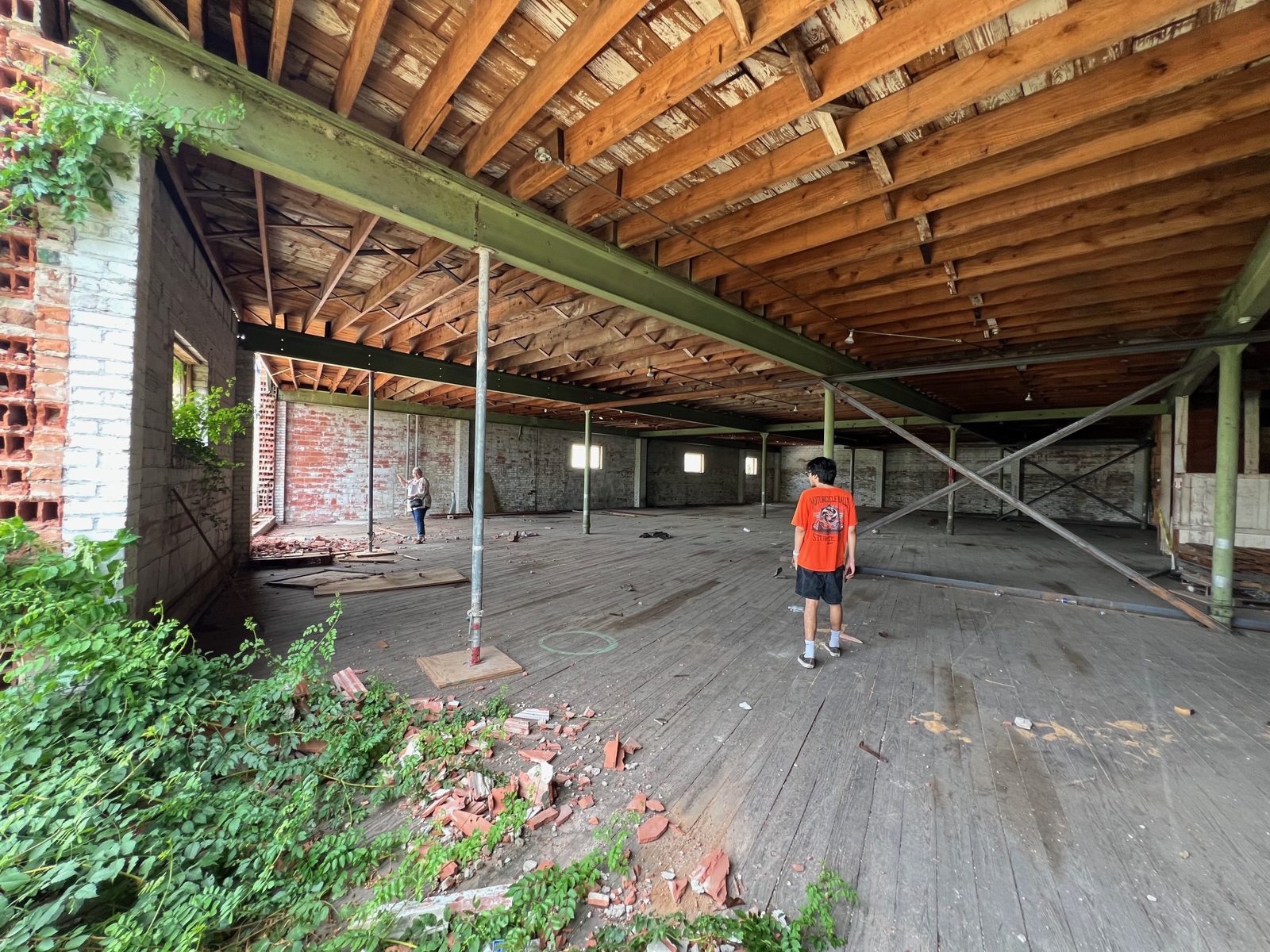
The vast, uninterrupted upper floor — open spans built for staging freight and automobiles.
The sugar that moved through this warehouse traces back to Sugar Land and the Imperial Sugar operation in Fort Bend County — one of the oldest industries in Texas. In 1893, the Sugar Land Railway Company was chartered by Ed. H. Cunningham and Company to run from Sugar Land east to Arcola, connecting there to the International & Great Northern Railroad. From Arcola, the I&GN trunk line (later Missouri Pacific) carried freight north into Houston and the East End warehouse district that the Wald building anchored.
It is a fitting lineage: refined sugar from the plantations of the Brazos bottoms, moving by rail through Arcola and into a Houston warehouse purpose-built to receive it.
The large "Wald" sign still standing atop the complex is a survivor of the Wald Transfer & Storage company that operated these warehouses for decades. It rises above the building that now houses the mini-storage units — fittingly, the part of the complex still doing what Wald always did. When the complex was redeveloped, the sign was deliberately preserved, and the property was rebranded around it as "The Historic Wald Building." The name on the roof is now the name of the place.
The sign was never a logo for a tenant. It was the business — and keeping it is how a 1927 warehouse keeps telling you what it used to be.
For most of the building's working life, its most remarkable feature was the original freight hoist — a car-sized lift that raised automobiles from street level to the second floor. A heavy cast-iron sheave wheel mounted in the rafters, the cable rigging, and a green-painted platform and gates carried the load. It was a piece of 1920s industrial engineering, and it survived inside the building for the better part of a century.
It is gone now. The winch and lift did not survive the building's transformation, and the photographs below are the last record of that chapter — captured before the mechanism was removed. They are the only remaining evidence that, for decades, cars rose through this floor on a hoist built in the 1920s.
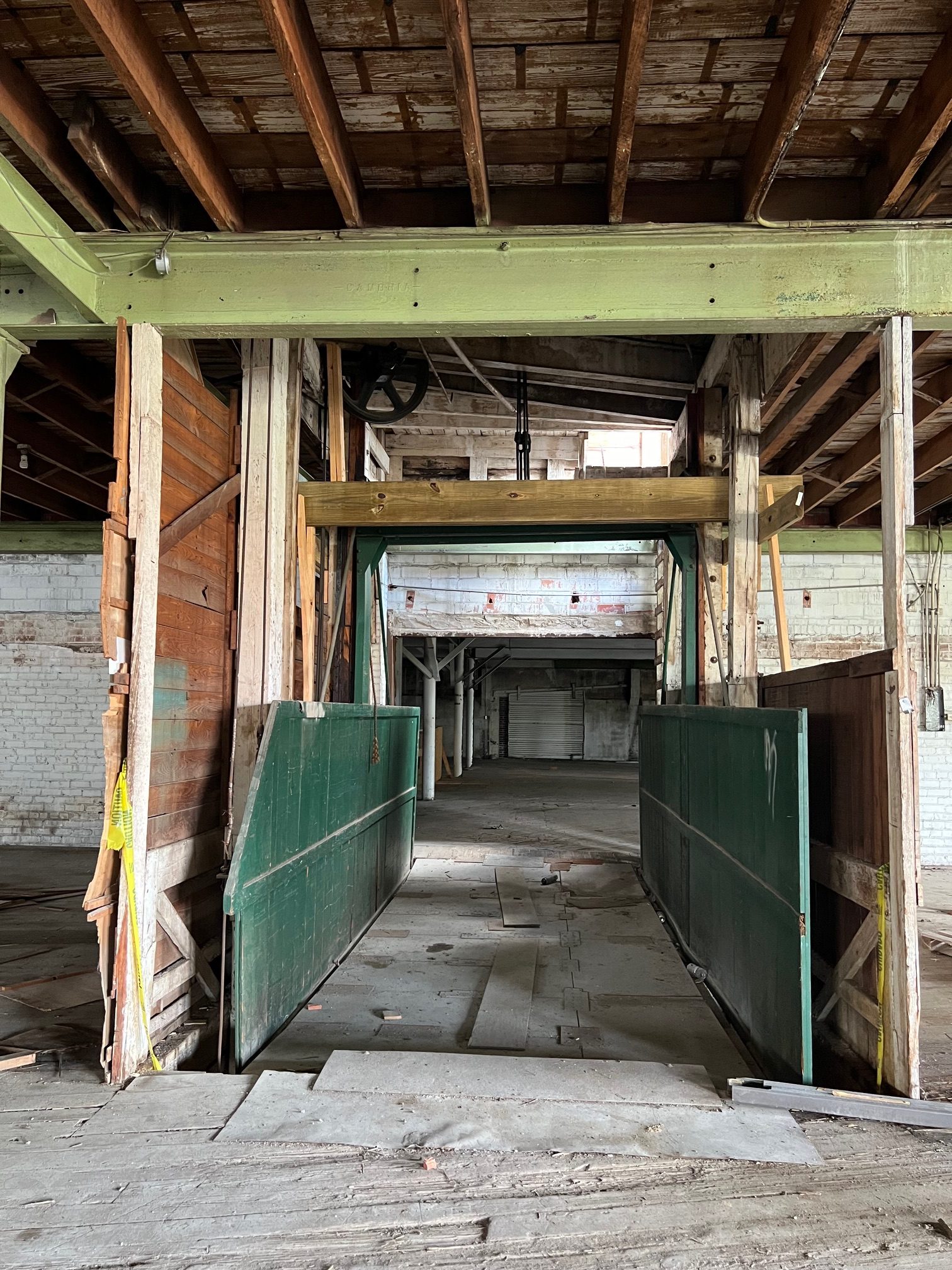
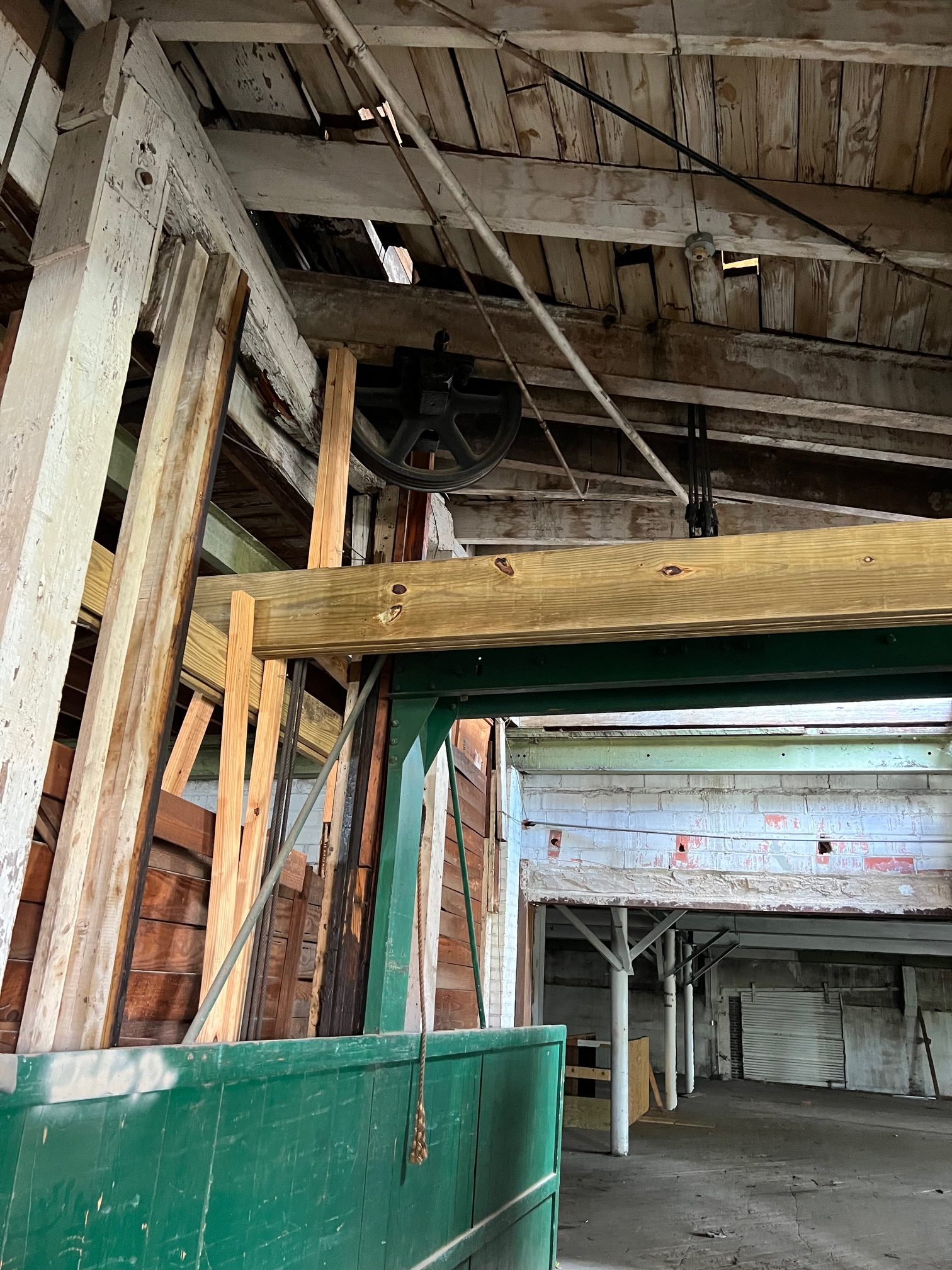
The car hoist, head-on: the cast-iron sheave wheel above, the platform and gates below, photographed before removal.
In August 2024, renovations began on the warehouses that would become the future home of Stanley Law — two of the four buildings in the Wald complex, joined into a single office. The redevelopment kept the bones — brick, beams, and pine floors — while reworking the interiors for modern office use, with a patio along the hike-and-bike trail.
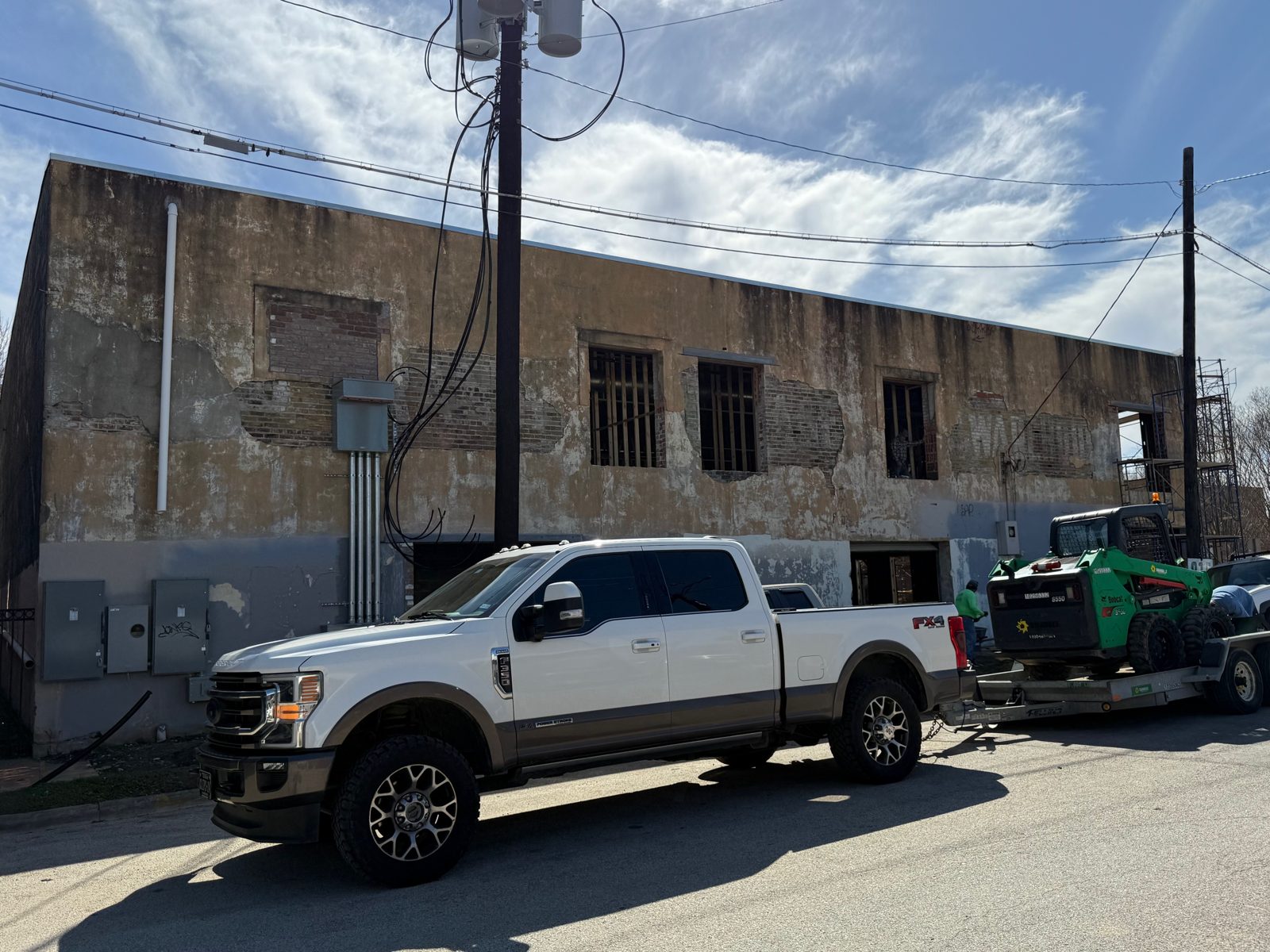
Before: the weathered warehouse exterior at the start of the project, equipment staged on St. Charles Street.
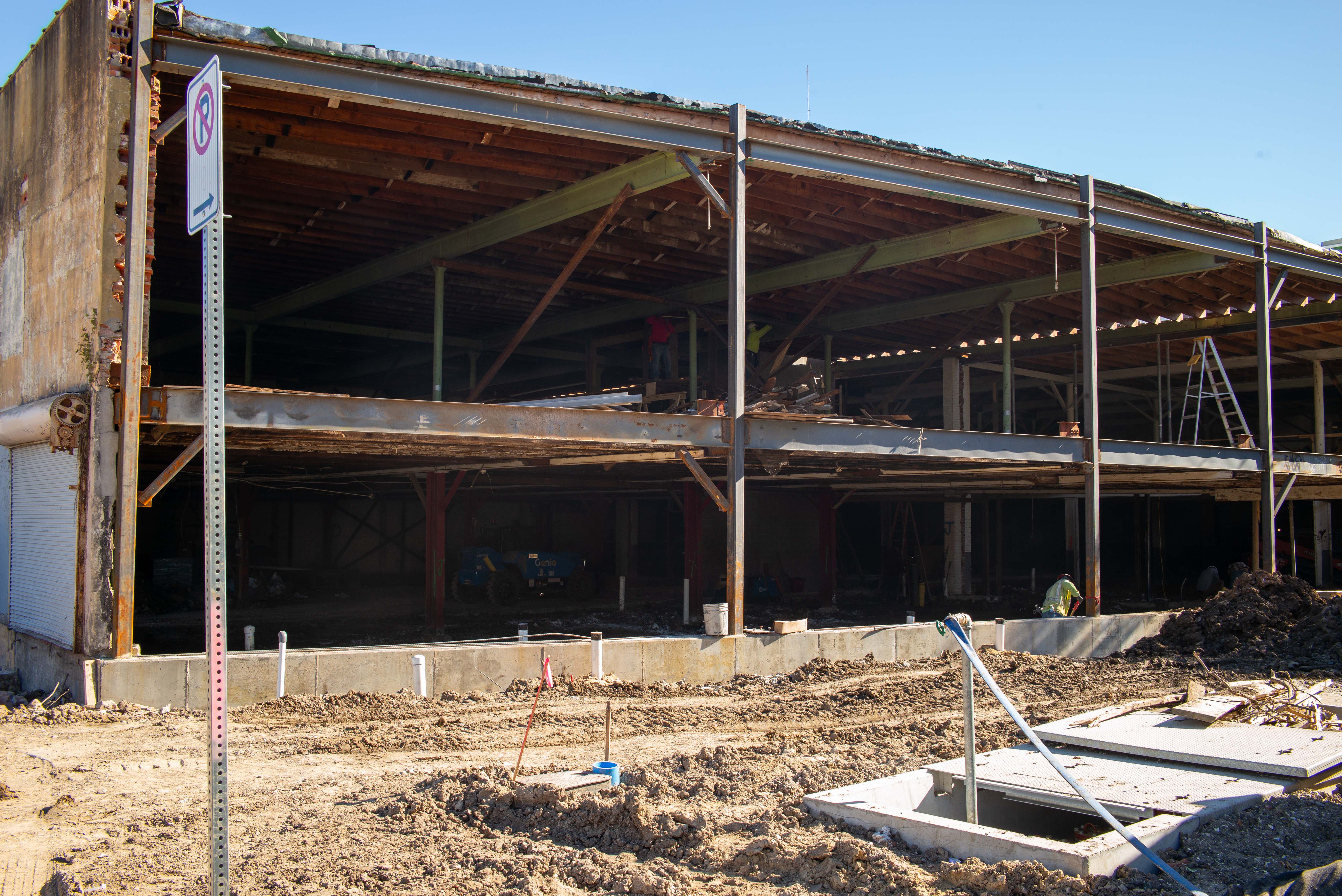
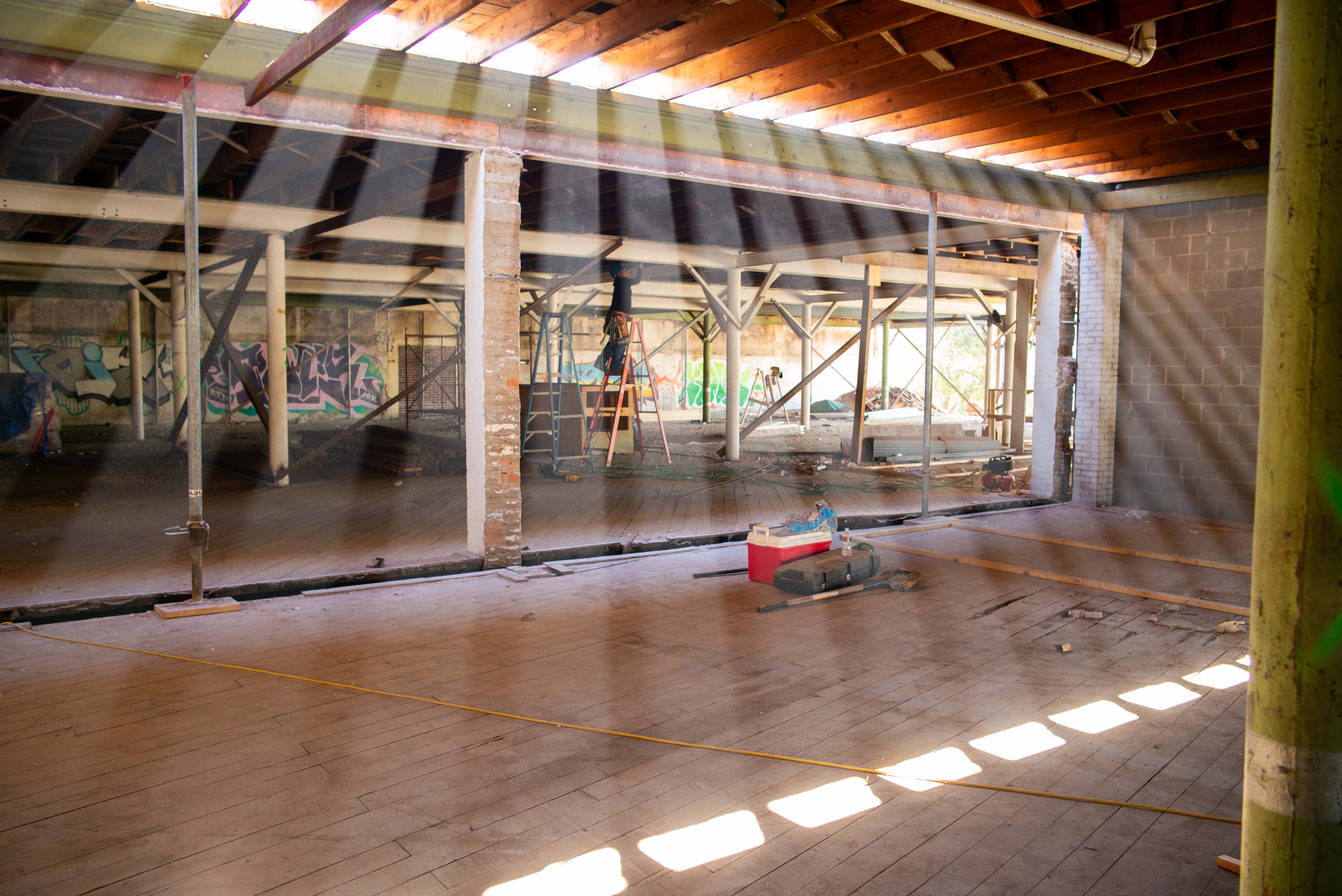
Renovation underway, August 2024.
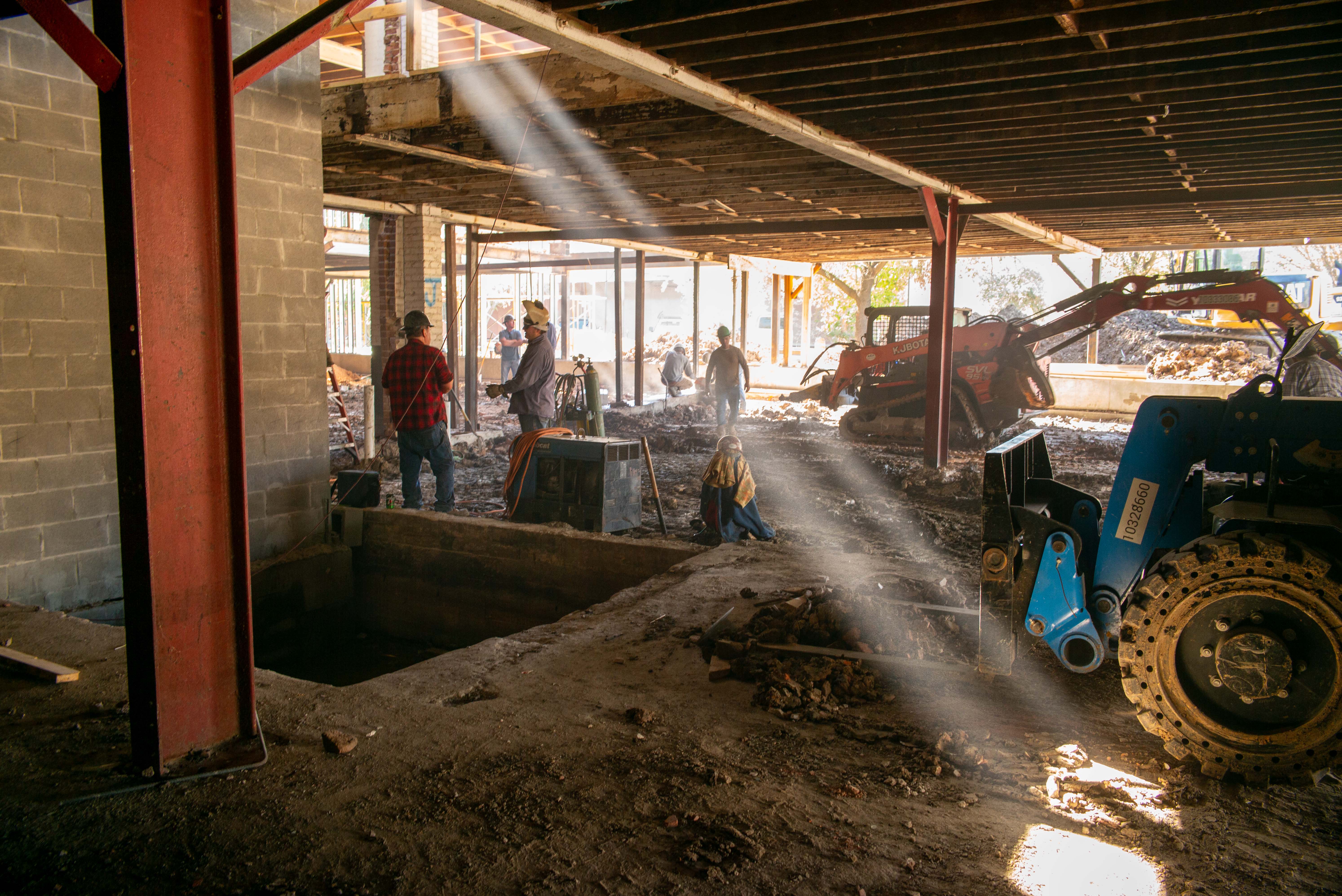
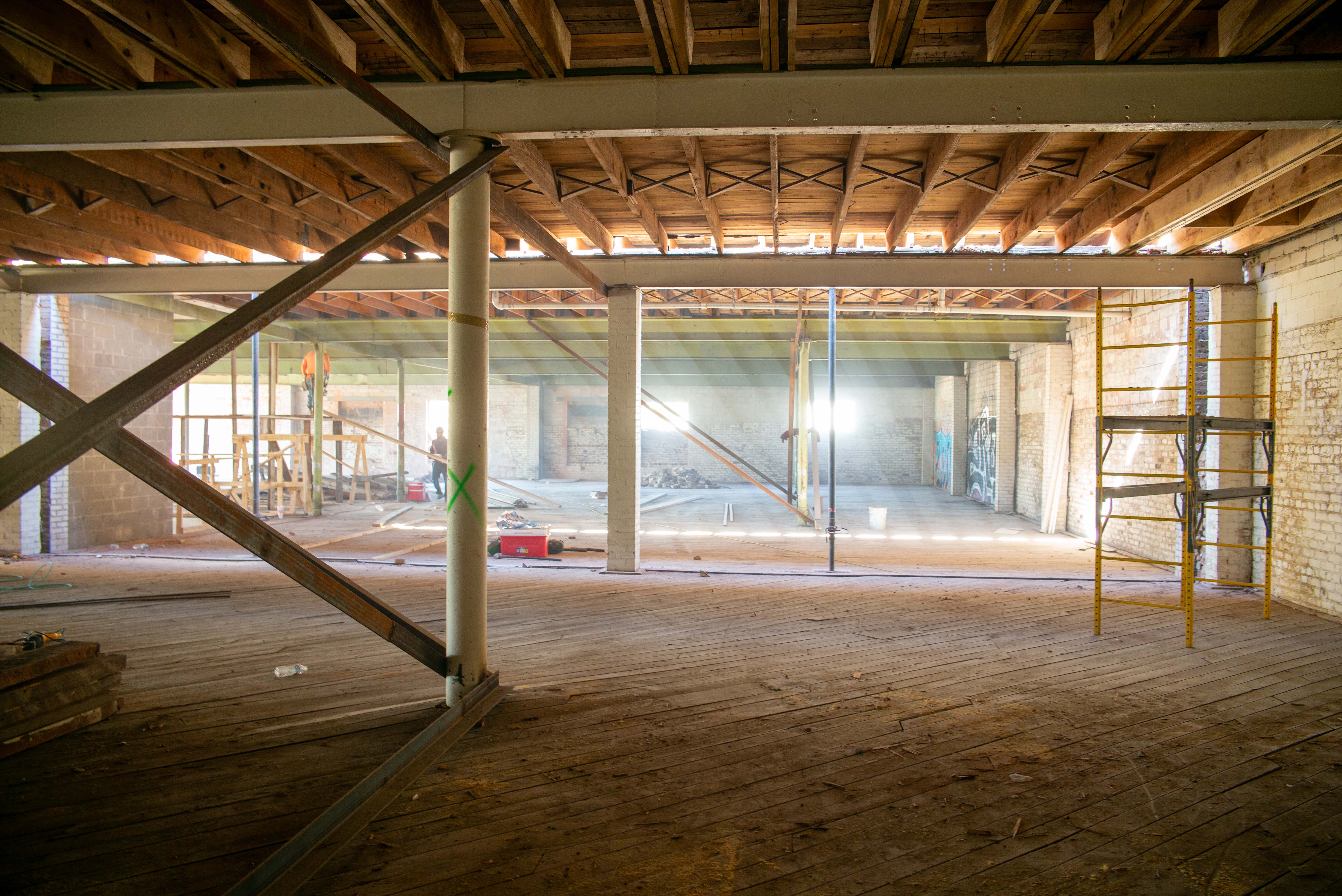
Original structure exposed during the work.
In the years the building sat empty, street artists left their mark on the interior brick. When the restoration began, the decision was made to keep it. Rather than scrub the walls back to a blank slate, the project preserved as much of the building's history as possible — the 1920s timber and the rooftop sign, but also the more recent chapter written in spray paint. One of those pieces now survives as a feature wall inside a working office at Stanley Law, where the lettering sits behind a desk rather than behind a chain-link fence.
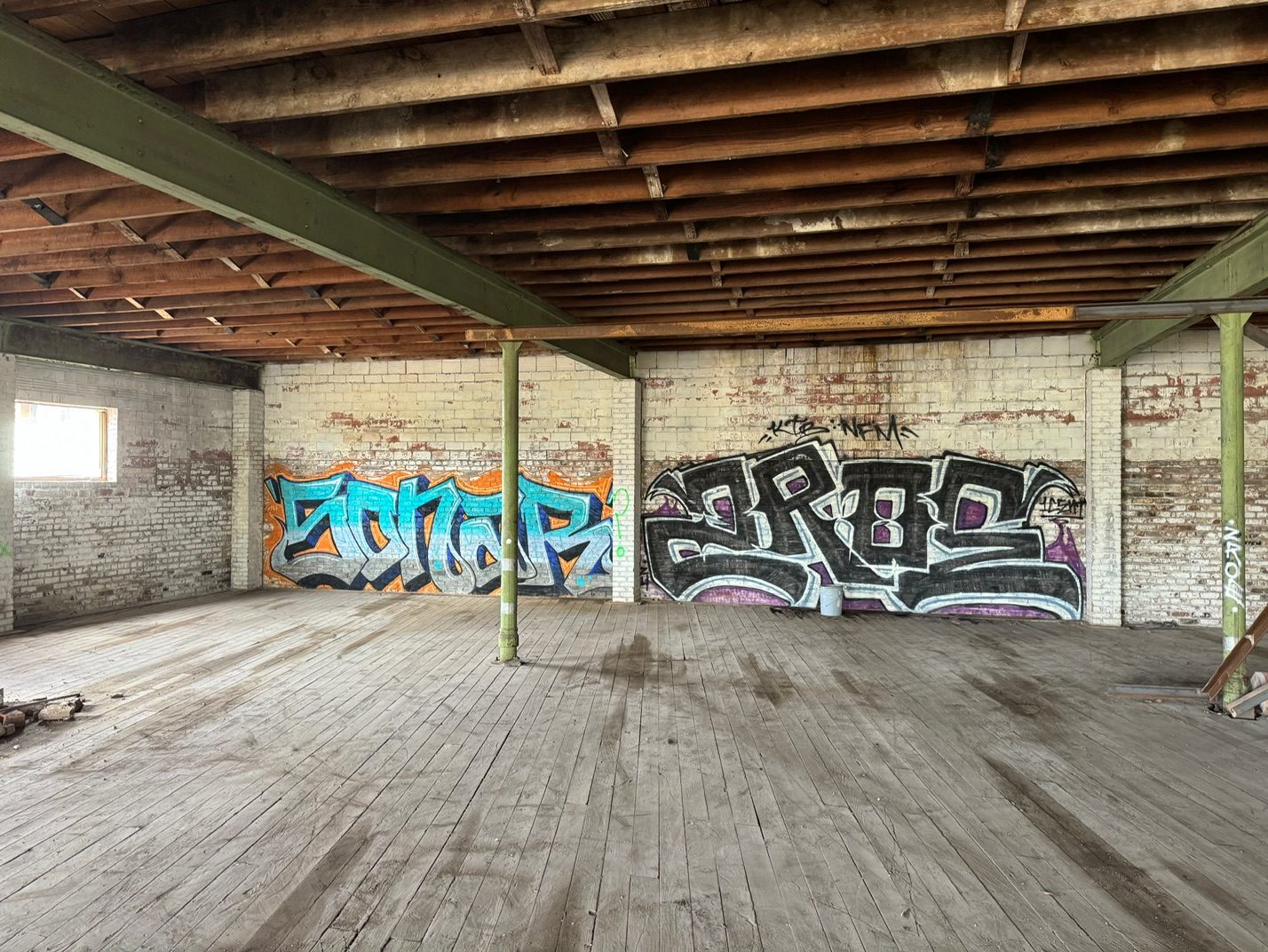
Preserved graffiti on the original brick — kept as part of the building's full story.
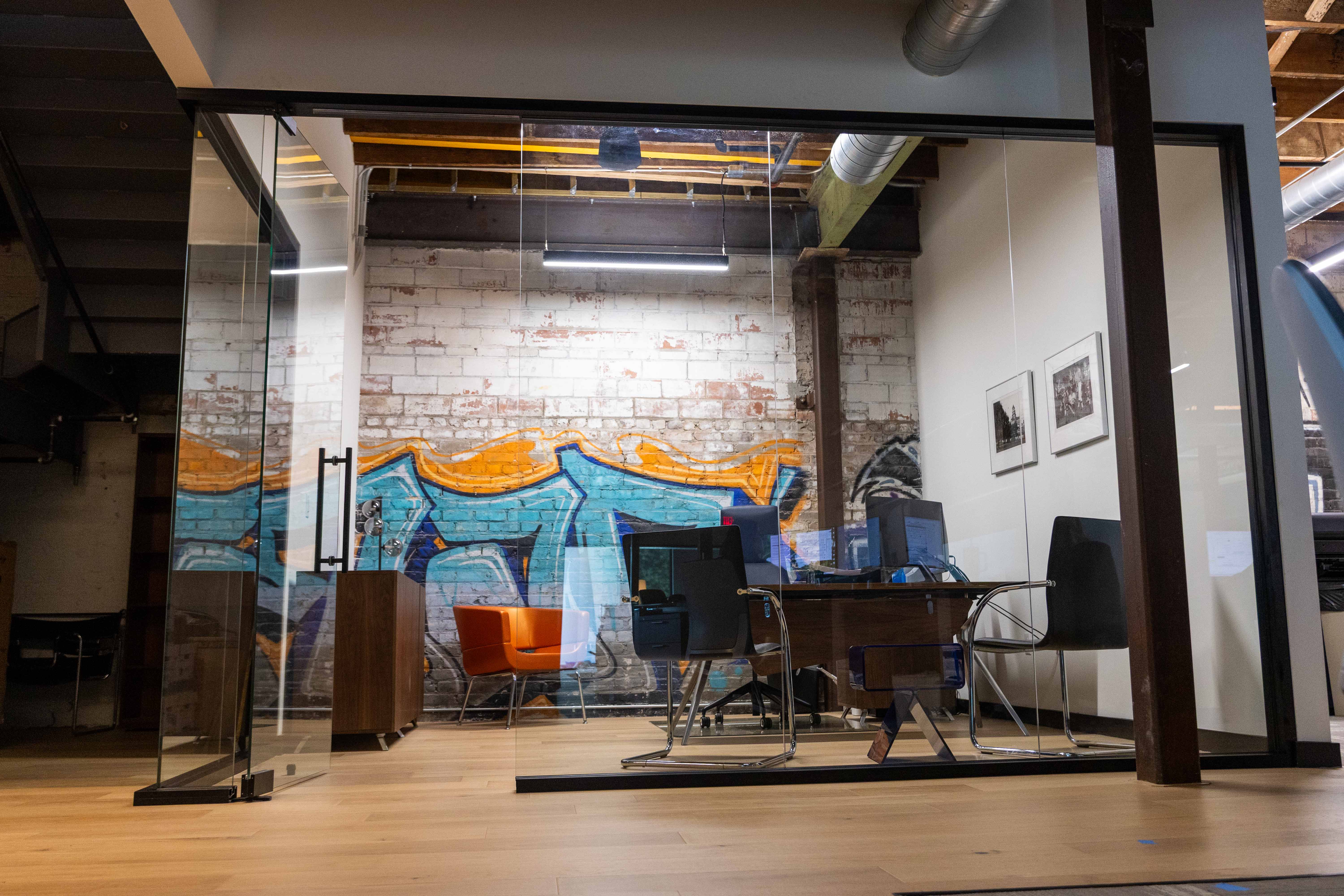
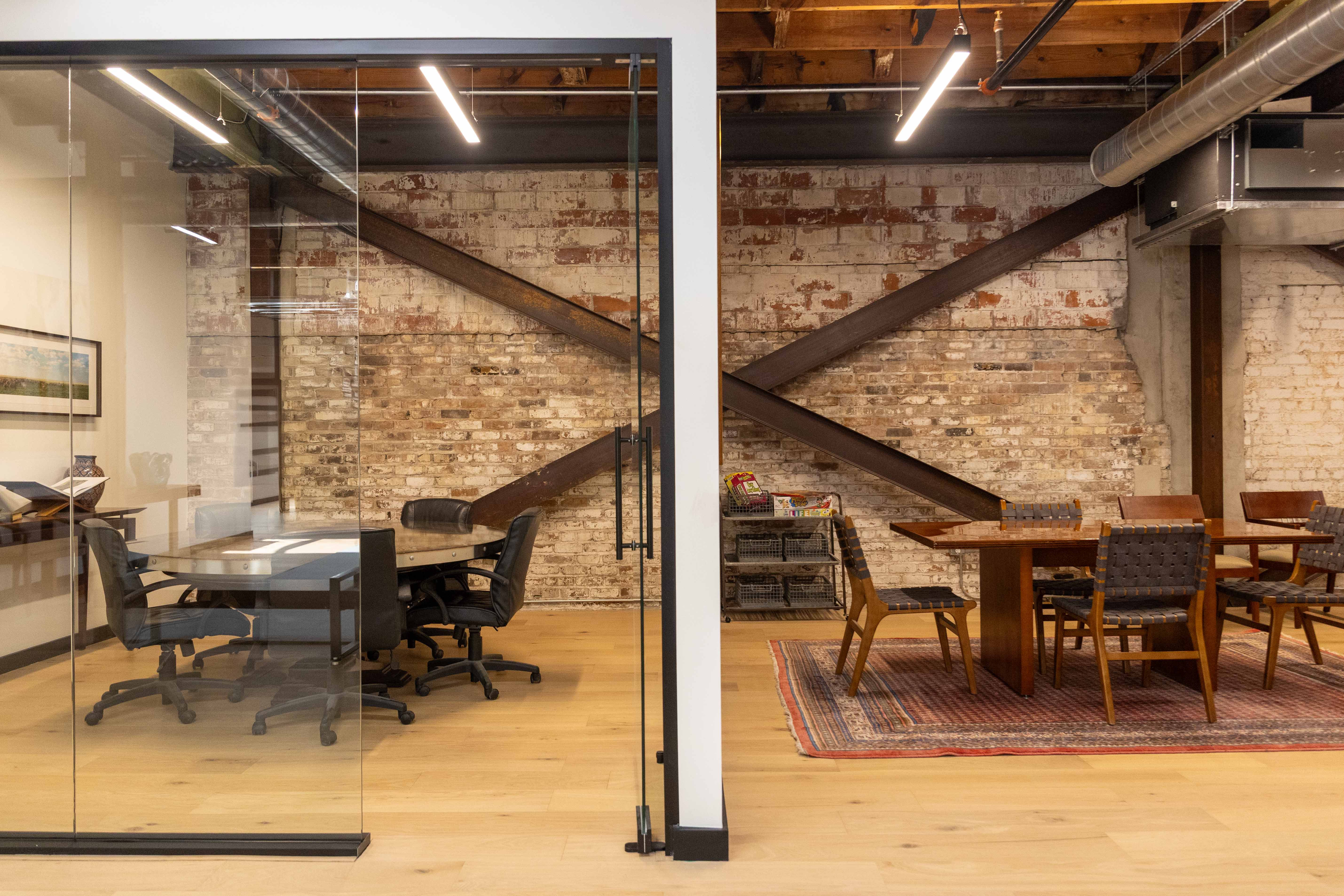
Original structure exposed during the work.
Where the firm works today.

Old bones, new purpose.

The completed office space - 2025
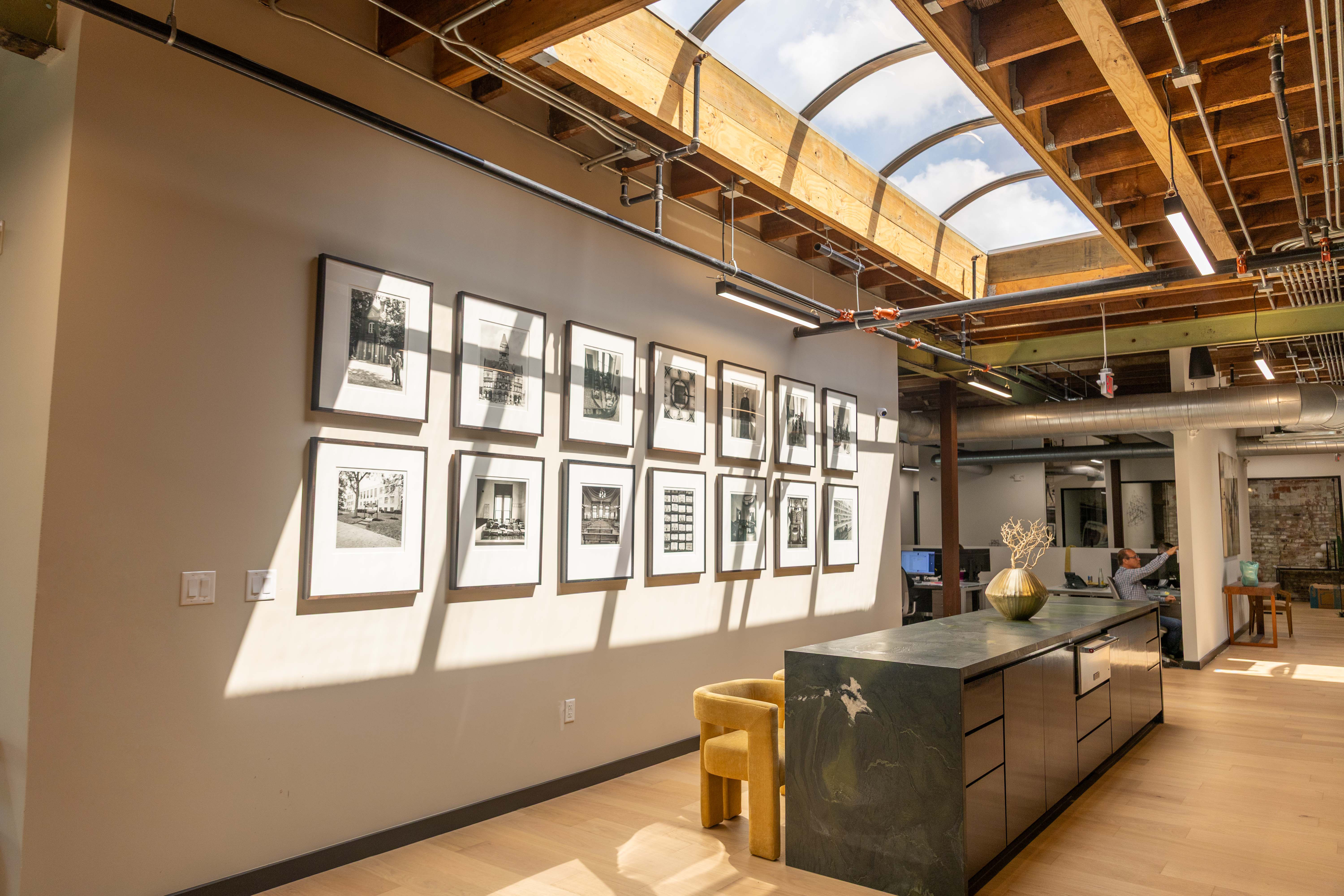
Modern interior within the historic shell.

June 2025 — Stanley Law Comes Home
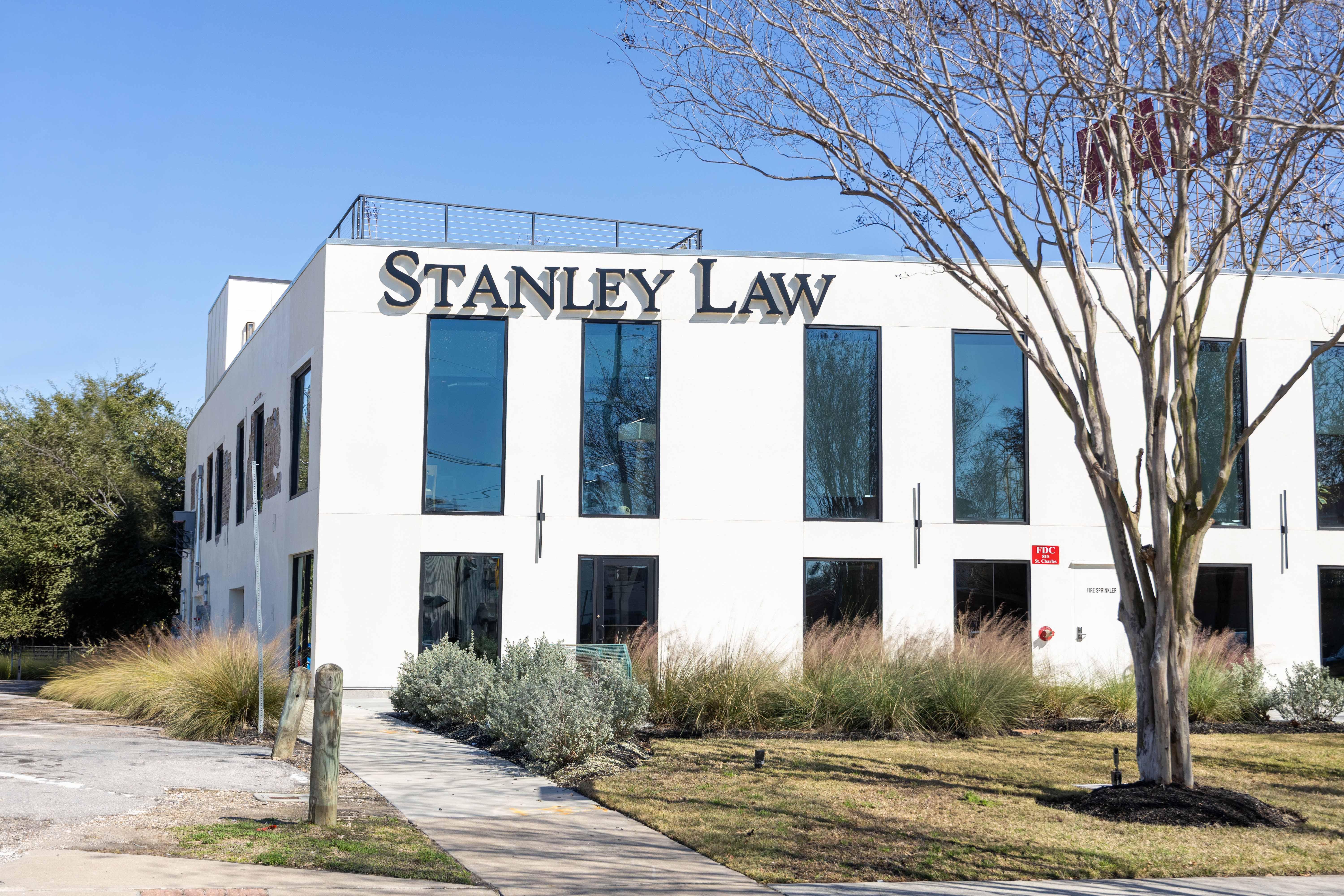
Two names, one building: "STANLEY LAW" on the facade, the historic "WALD" sign above.
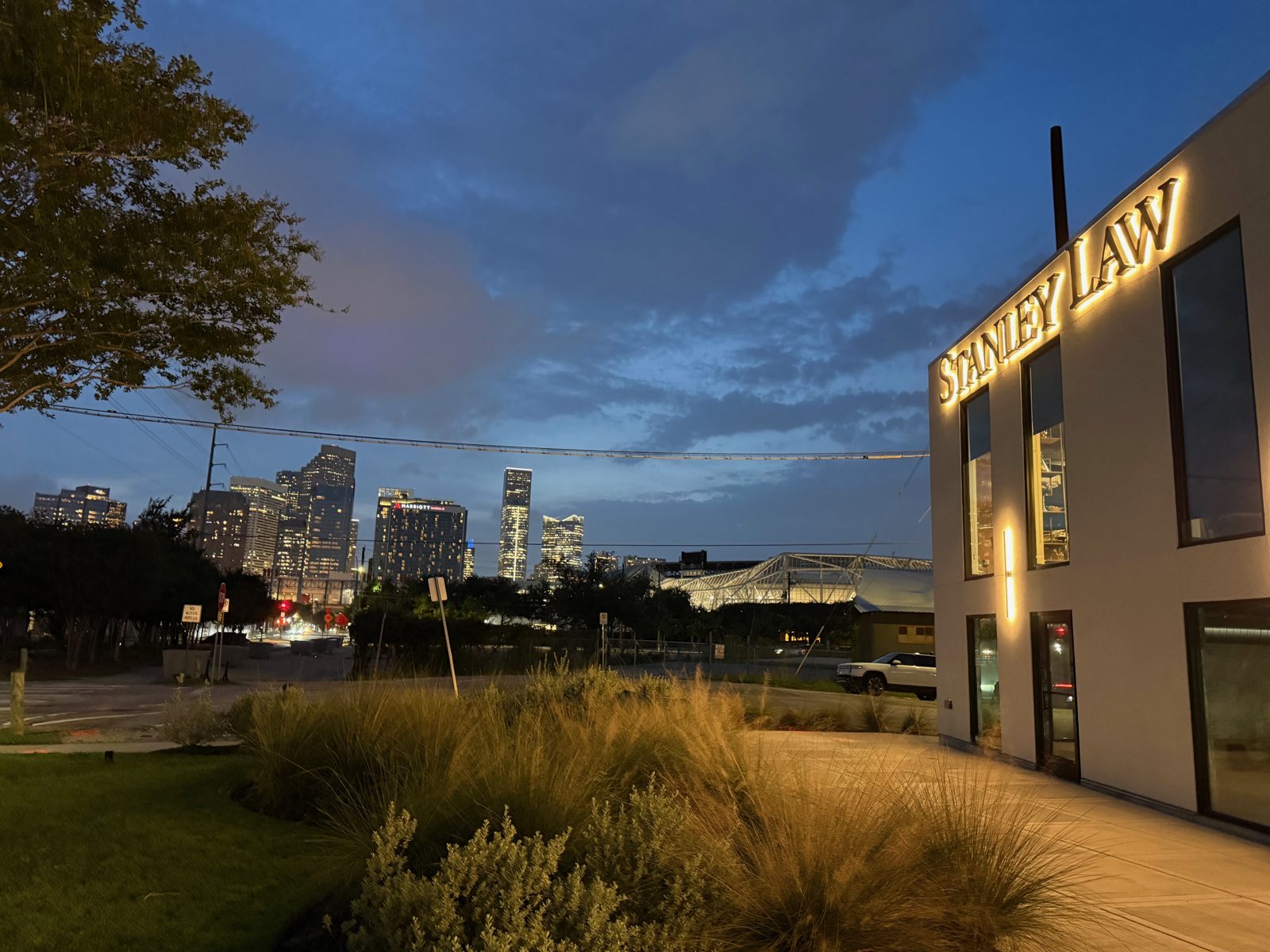
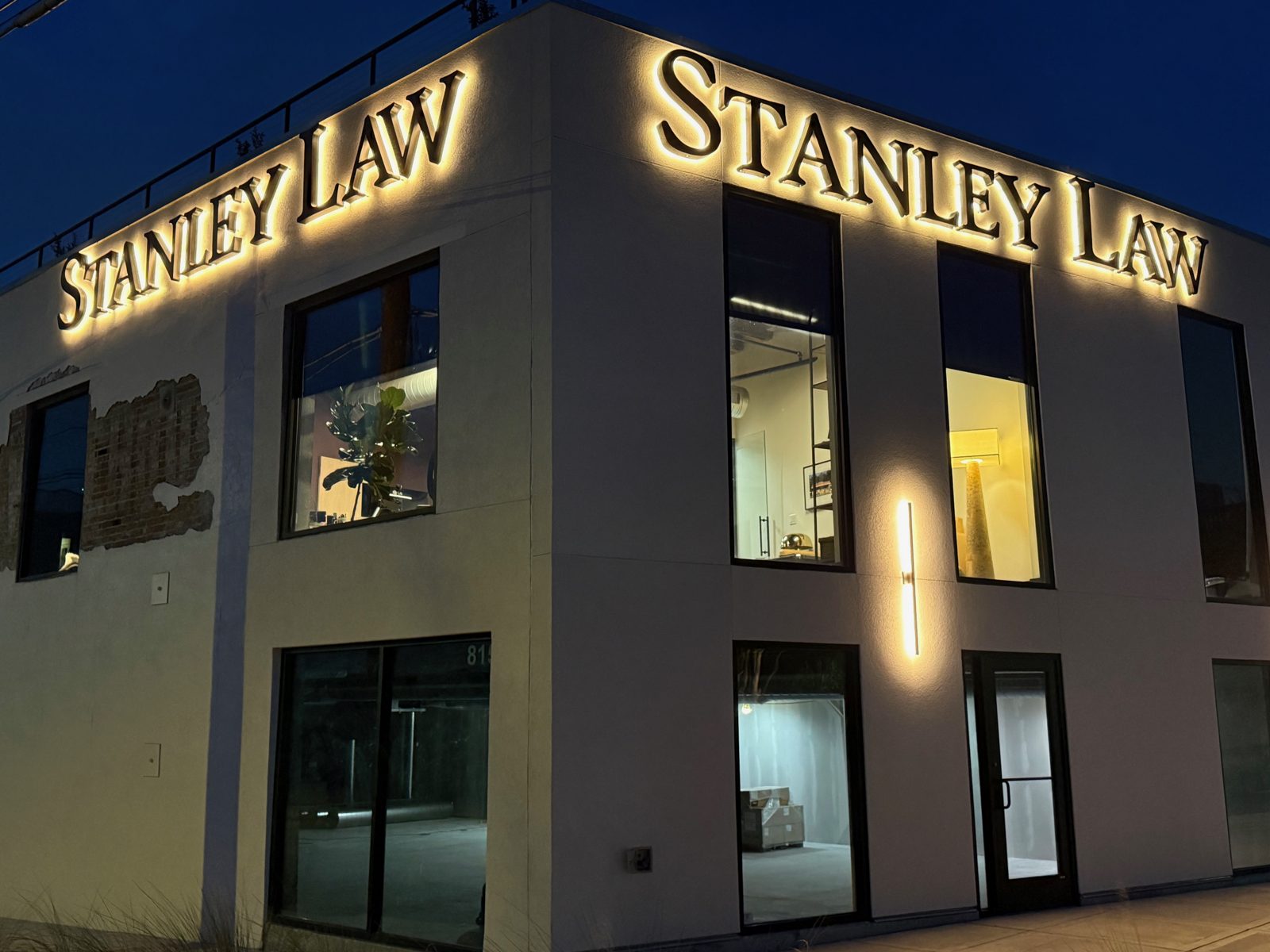
Blue hour, with the downtown skyline and Shell Energy Stadium beyond; Restored stucco beside a deliberately exposed patch of original brick.
The building's history doesn't end at its own walls. Stanley Law holds a collection of more than fifty original photographs by Geoff Winningham, the acclaimed Houston photographer and longtime Rice University professor whose work hangs in the Museum of Modern Art, the Metropolitan Museum of Art, and the Museum of Fine Arts, Houston. Shot in his signature photojournalistic style, these images document the street scenes of East Downtown and the surrounding neighborhoods in the 1970s and 1980s.
The people and places in them give a sense of what Houston was like half a century ago — the same era when the Wald building was still a vibrant, working business. Together, the collection turns the building from a single restored structure into a window onto the neighborhood that grew up around it.
The Geoff Winningham photographs on display at the Stanley Law office.